What is it?
The TDS (Truck Docking System) is an electromechanical safety solution for loading docks. It is a robust physical truck restraint system permanently installed at the loading dock. Specifically designed to prevent premature or unexpected movement of heavy vehicles during loading and unloading operations, it acts as a mechanical retention system that immobilizes the truck.
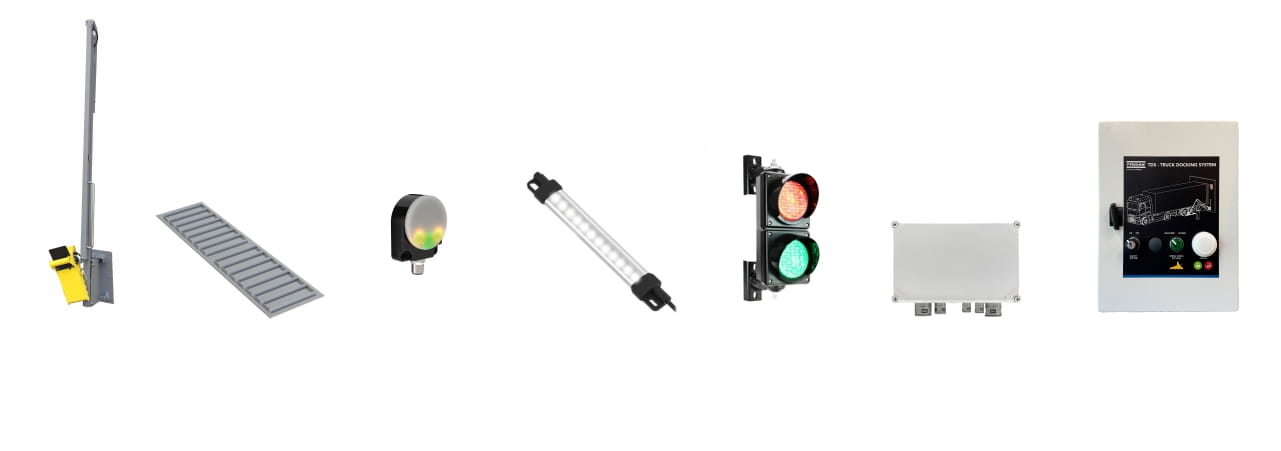
System elements
Electronic wheel
chock
+ articulated arm
Distance measuring
radar
Retention
base
Connection boc
exterior
Control unit
Traffic light
Led bar
(Positioning)
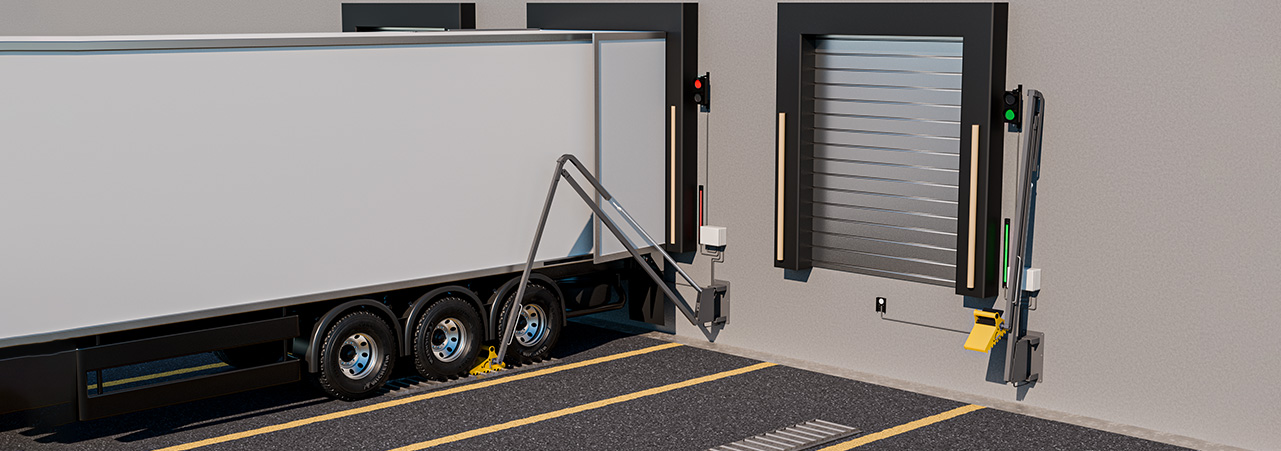
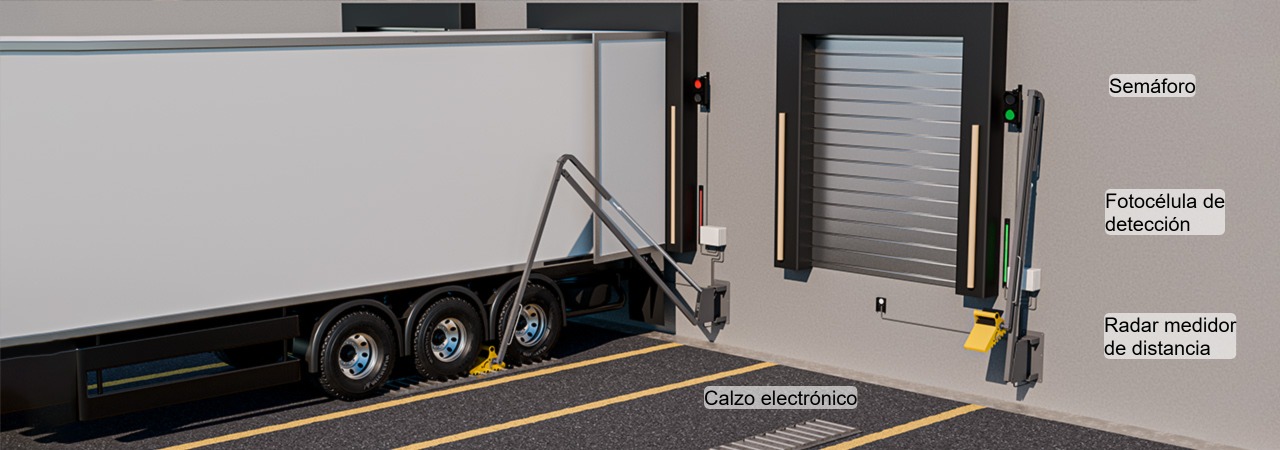
Led bar
Distance measuring
radar
Traffic light
Retention base
Electronic wheel
chock
What is it used for?
The TDS system is designed to minimize the severity of dock-related accidents and reduce the risk of forklift falls or run-over incidents caused when a truck departs prematurely. It creates much safer loading and unloading environments, prevents gradual truck movement caused by repeated forklift impacts, and reduces communication failures between truck drivers and warehouse operators.
How does it work?
The system operates through a coordinated and automated sequence:
Guided Approach: An external radar detects the truck while it is reversing toward the dock. An exterior LED light bar progressively changes color (from green to red), precisely guiding the driver to the optimal stopping position against the dock.
Physical Locking: Once parked, the TDS wheel restraint arm is positioned and activated directly onto an anchoring platform fixed to the ground, physically locking the trailer wheel to prevent vehicle movement.
Coordination and Authorization: Dock sensors verify the correct position of the wheel restraint and the opening of the industrial door. An internal control unit visually and acoustically informs forklift operators that the area is completely safe and loading operations may begin. Meanwhile, the truck driver sees a red traffic light outside indicating that departure is prohibited.
Guided Approach: An external radar detects the truck while it is reversing toward the dock. An exterior LED light bar progressively changes color (from green to red), precisely guiding the driver to the optimal stopping position against the dock.
Physical Locking: Once parked, the TDS wheel restraint arm is positioned and activated directly onto an anchoring platform fixed to the ground, physically locking the trailer wheel to prevent vehicle movement.
Coordination and Authorization: Dock sensors verify the correct position of the wheel restraint and the opening of the industrial door. An internal control unit visually and acoustically informs forklift operators that the area is completely safe and loading operations may begin. Meanwhile, the truck driver sees a red traffic light outside indicating that departure is prohibited.
What elements does it include?
The complete TDS ecosystem consists of the following indoor and outdoor plant devices:
TDS Arm and Mechanical Wheel Chock: The primary structural component responsible for physically restraining the commercial vehicle wheel.
Anchoring Platform: A heavy-duty mounting base installed on the ground in front of the dock entrance where the wheel restraint locks into place (available in standard or snow-adapted versions).
External Radar: Sensor that detects the approach of the truck chassis or trailer body.
Exterior LED Light Bar: Dynamic visual indicator that chromatically guides vehicle proximity to the dock (Green to Red).
Exterior Traffic Light: Standard light signaling system used to communicate restraint status to the truck driver.
Door Sensor: Component that monitors whether the dock door is open or closed to logically authorize operations.
Internal Control Unit: A control panel with displays/indicators located inside the warehouse that coordinates the automation process and informs forklift operators whether they may safely enter the trailer.
External Junction Box: Industrial connection box where cables from all exterior sensors and components converge to ensure coordinated operation.
TDS Arm and Mechanical Wheel Chock: The primary structural component responsible for physically restraining the commercial vehicle wheel.
Anchoring Platform: A heavy-duty mounting base installed on the ground in front of the dock entrance where the wheel restraint locks into place (available in standard or snow-adapted versions).
External Radar: Sensor that detects the approach of the truck chassis or trailer body.
Exterior LED Light Bar: Dynamic visual indicator that chromatically guides vehicle proximity to the dock (Green to Red).
Exterior Traffic Light: Standard light signaling system used to communicate restraint status to the truck driver.
Door Sensor: Component that monitors whether the dock door is open or closed to logically authorize operations.
Internal Control Unit: A control panel with displays/indicators located inside the warehouse that coordinates the automation process and informs forklift operators whether they may safely enter the trailer.
External Junction Box: Industrial connection box where cables from all exterior sensors and components converge to ensure coordinated operation.
Where can it be used?
The TDS system is ideal for loading docks, receiving and shipping bays, logistics platforms, and warehouses with intensive operational activity. It is perfectly suited for demanding outdoor environments and industrial facilities with continuous heavy vehicle traffic, offering resistance to both standard industrial conditions and adverse weather environments such as rain or snow.
Advantages
Prevention of serious accidents: Eliminates risks caused by human error when truck drivers move the vehicle before loading or unloading operations are completed — one of the leading causes of dock accidents.
Mechanical locking: The system does not rely solely on visual warnings; it physically restrains the truck using a high-strength mechanical mechanism.
Clear visual parking assistance: The progressive LED color transition helps prevent harsh impacts against the building structure during docking maneuvers.
Mechanical locking: The system does not rely solely on visual warnings; it physically restrains the truck using a high-strength mechanical mechanism.
Clear visual parking assistance: The progressive LED color transition helps prevent harsh impacts against the building structure during docking maneuvers.
Things to consider
It is important to consider that the TDS system requires proper physical alignment with the dock axis and regular maintenance. Instructions provided by the internal control unit must be strictly followed: the industrial loading door or dock leveler must not be activated until the exterior TDS sensors confirm that the truck has been mechanically secured.
If you have questions regarding platform dimensions or compatibility with low-profile trucks, please contact us through www.troax.com
If you have questions regarding platform dimensions or compatibility with low-profile trucks, please contact us through www.troax.com