

What is this?
The AI Detection Camera System (AISS) is a visual assistance solution designed to increase safety in industrial and workplace environments. Unlike radio-frequency-based systems (RFID), this device processes images to identify and distinguish human figures and moving vehicles with high precision. The detection range is configurable and varies depending on the camera lens.
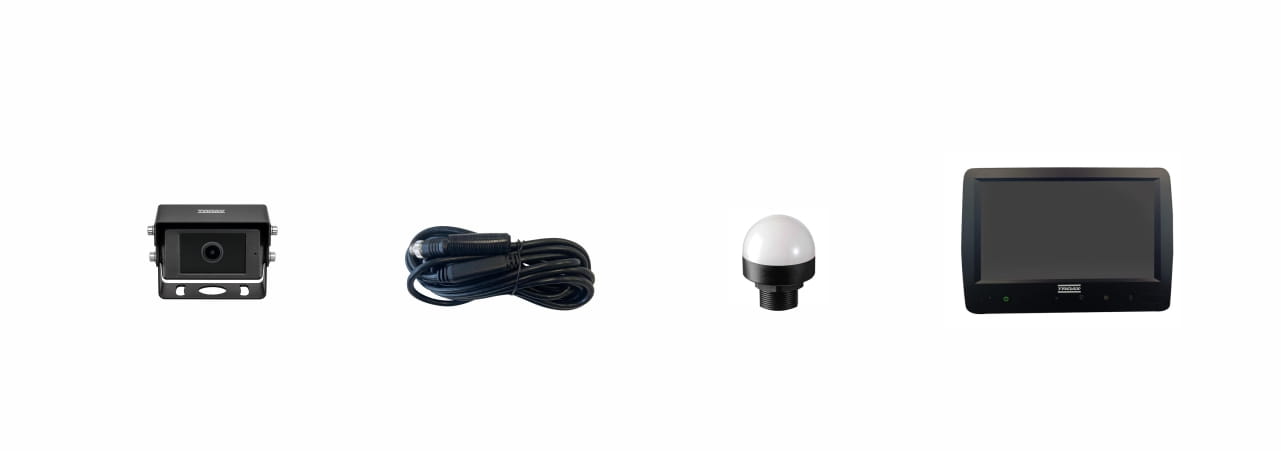
Monitor
*Optional
Warning light
RGB
Connection
cables
AI cameras
System elements
What is it used for?
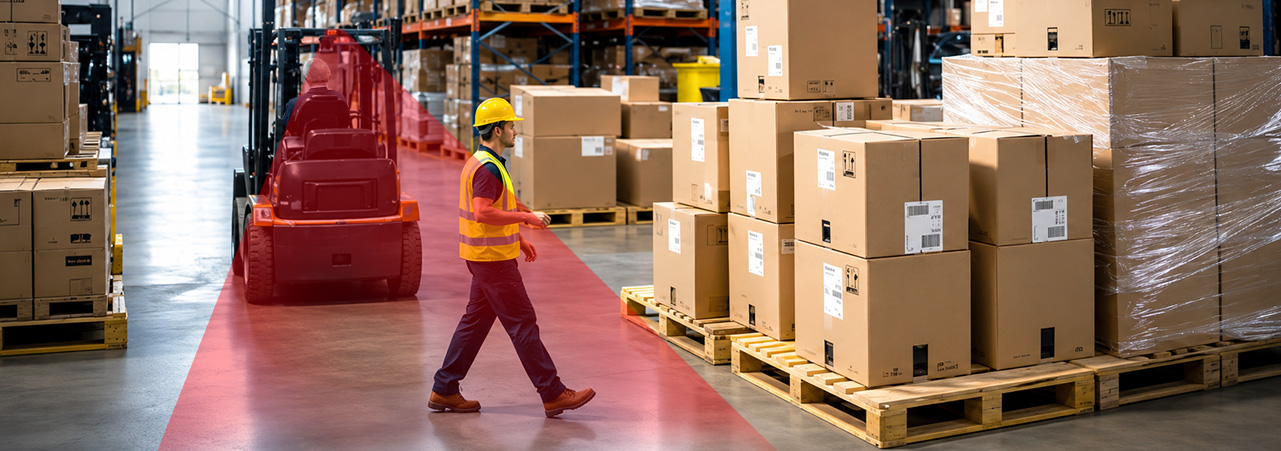
It is mainly used to warn of hazardous situations, minimize the number of accidents, and reduce the risk of collisions or run-overs in complex work environments. By monitoring critical operational points, it creates a much safer and more efficient working ecosystem for both operators and machinery. In addition, being a non-intrusive and configurable visual assistance system, it can easily complement other industrial safety devices.
How does it work?
Unlike other solutions, pedestrians do not need to carry any electronic key fob, tag, or active device. The camera itself, thanks to its embedded image processing technology, detects the silhouette of a person or vehicle within the configured safety zones.
When a detection occurs, the system immediately generates audible and visual alerts through an optional monitor installed in the cabin or via technical signals (wired alarm outputs) to external indicators. This way, the driver receives real-time warnings about potential danger and can take the necessary precautions.
When a detection occurs, the system immediately generates audible and visual alerts through an optional monitor installed in the cabin or via technical signals (wired alarm outputs) to external indicators. This way, the driver receives real-time warnings about potential danger and can take the necessary precautions.
What devices does it include?
The system is modular, compact, and easy to configure through a web-based interface. Its main and optional components are:
AI Detection Camera: The core of the system. It is available in different models depending on optical requirements and is built with robust materials for demanding environments.
Optional Monitor: A 7-inch screen installed in the driver’s cabin. It displays real-time camera images and provides direct acoustic alerts.
Wi-Fi Configuration Tool: An accessory device that temporarily connects to the camera to create a local wireless network. Through it, technicians can access the calibration interface from any web browser to adjust zones, sensitivity, and parameters.
DC/DC Converter: Required for forklifts operating with battery voltages outside the camera’s standard range (DC 10–32V).
AI Detection Camera: The core of the system. It is available in different models depending on optical requirements and is built with robust materials for demanding environments.
Optional Monitor: A 7-inch screen installed in the driver’s cabin. It displays real-time camera images and provides direct acoustic alerts.
Wi-Fi Configuration Tool: An accessory device that temporarily connects to the camera to create a local wireless network. Through it, technicians can access the calibration interface from any web browser to adjust zones, sensitivity, and parameters.
DC/DC Converter: Required for forklifts operating with battery voltages outside the camera’s standard range (DC 10–32V).
Where can it be used?
Due to its high versatility, the system can be installed in two different ways:
On forklifts or other industrial machinery: Ideal for eliminating blind spots, assisting operators in areas with limited visibility, and preventing direct collisions.
In fixed locations: Perfect for monitoring specific high-risk areas, loading and unloading zones, blind pedestrian crossings, and exits in automated or conventional warehouse aisles.
In general, it is a highly recommended system for shared work areas where forklifts and pedestrians operate together (such as production lines), where traffic flows coexist in limited spaces and it is essential to take extra safety precautions.
On forklifts or other industrial machinery: Ideal for eliminating blind spots, assisting operators in areas with limited visibility, and preventing direct collisions.
In fixed locations: Perfect for monitoring specific high-risk areas, loading and unloading zones, blind pedestrian crossings, and exits in automated or conventional warehouse aisles.
In general, it is a highly recommended system for shared work areas where forklifts and pedestrians operate together (such as production lines), where traffic flows coexist in limited spaces and it is essential to take extra safety precautions.
Advantages
Smart and autonomous detection: Accurately distinguishes people from vehicles or other static obstacles using AI, reducing false alarms that could distract the operator.
No tags required: Operators and external personnel do not need to carry electronic devices; the system protects anyone within its visual range.
Fully customizable zones: Allows users to draw and configure different danger zone shapes (trapezoids, semicircles, ellipses, or freeform areas) according to the real environment.
Guaranteed privacy: Data processing is strictly local and embedded; the system does not perform facial recognition, does not store personal data, and does not record images or videos. It also includes an option to automatically pixelate detected faces.
No tags required: Operators and external personnel do not need to carry electronic devices; the system protects anyone within its visual range.
Fully customizable zones: Allows users to draw and configure different danger zone shapes (trapezoids, semicircles, ellipses, or freeform areas) according to the real environment.
Guaranteed privacy: Data processing is strictly local and embedded; the system does not perform facial recognition, does not store personal data, and does not record images or videos. It also includes an option to automatically pixelate detected faces.
Things to consider
It is important to remember that the AI detection camera is designed as a complementary assistance tool. The driver remains fully responsible for the safe operation of the vehicle and must stay attentive at all times, as external factors may affect system accuracy.
If you have any questions about zone configuration or the most suitable camera model for your facility, please do not hesitate to contact us via www.troax.com
If you have any questions about zone configuration or the most suitable camera model for your facility, please do not hesitate to contact us via www.troax.com